A recent study commissioned by BCTGA, investigating the environmental impact of real Christmas tree production has found they can serve as a positive sink for carbon dioxide (CO2 ), a global warming greenhouse gas.
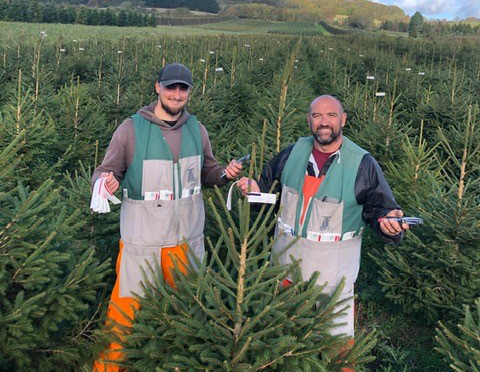
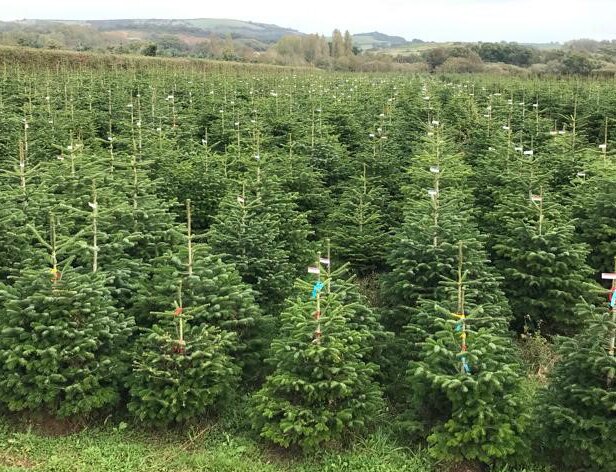
- Christmas tree farms act as natural CO2 sinks and support rich wildlife habits
- Real Christmas tree can store more CO2 than is emitted throughout production
- For every tree harvested, another is planted
- Real Christmas tree are fully recyclable, returning naturally to the earth
Why real Christmas Trees are significantly better for the environment
The findings suggest that using a real Christmas tree is significantly better for the environment than the artificial alternative. Artificial trees are typically produced from plastic made from oil, a finite resource and a known source of greenhouse gases, and for which the only means of disposal is landfill, where they may take hundreds of years to break down. The analysis also supports the findings of a similar study in Denmark. The Danish study was a life-cycle analysis that considered the CO2 emissions of inputs such as fertiliser and transportation to the point of sale.
The Danish analysis found that Nordmann Fir trees had, on average, removed the equivalent of 0.6 kg CO2 by the time they have arrived at the point of sale meaning they sequestered more CO2 than was released over the entire production process, a genuine rarity. Viewed in unison, the UK and Danish studies provide strong evidence that real Christmas trees represent a net gain for the environment in the battle with climate change.
Quantifying carbon sequestration in real Christmas tree
The UK study, performed by environmental consultants ADAS measured Photosynthetic Active Radiation (PAR) absorption, (the light used for photosynthesis) during a typical growing season. It found that a Nordmann Fir tree absorbs about 28 kg of CO2 during its nine-year growing period.
Of this, roughly 23 kg CO2 will be present in its biomass at harvest. This figure does not include the CO2 absorbed during the two- to three-year nursery period or that stored in the form of root biomass or dropped needles, so is likely to be an underestimation of the true figure.
To put the figure of 28 kg of CO2 into context, this is equivalent to a typical family car travelling 140 miles. By choosing a locally grown tree, consumers can further reduce the carbon footprint associated with transport and play an active role in supporting lower-impact, sustainable production.
How a Christmas tree is disposed of at the end of the festive period can have a considerable influence on its environmental impact. Many comparisons seek to apply the overly simplistic assumption that all trees go to landfill. This is patently not the case and is also the worst-case scenario as it would result in significant quantities of methane (CH4) being released into the atmosphere.
Methane is a far more harmful greenhouse gas than carbon dioxide, so any gains from buying a locally grown tree would be quickly reduced. Minimising the number of trees disposed of in landfill is therefore critical to supporting their appeal to climate conscious consumers. Instead, consumers should be encouraged to use sustainable methods of disposal, such as returning it to the grower or taking it to their local waste disposal centre for processing into wood chip and/or compost
Several studies have sought to calculate the CO2 generated in the manufacture of artificial Christmas trees to give a meaningful comparison with real Christmas trees. Research by a European study concluded that artificial tree production emits roughly 50 kg CO2 . A Canadian study estimated it at 48.3 kg CO2
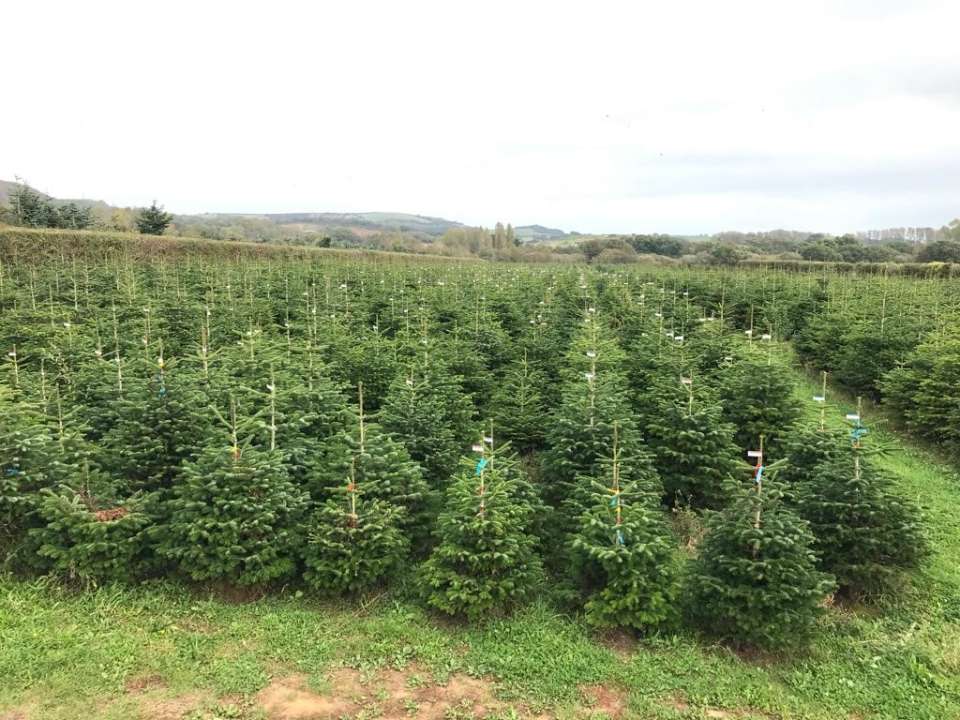
International Studies
Comparing the production systems of real Christmas trees between countries is often difficult due to the differences in local climate and the production systems employed, but the Danish study is relevant to the UK (and vice versa) because of the similarities between the two. Production in both countries is dominated by Nordmann Fir (Abies Nordmanniana) rather than Fraser Fir (A. Fraseri) or Balsam Fir (A. Balsamea), both of which are native to North America and are the basis for most assessments. That the UK and Danish studies, both of which were performed independently, reached similar conclusions is a strong endorsement of the climate friendly nature of Nordmann Fir production and supports the ‘buy real, buy local’ message given to consumers.
Sustainable plantations supporting wildlife
It may seem obvious, but in the eyes of many growers, Christmas tree plantations are no different to other forms of woodland, acting as both a “CO2 sink” and a wildlife habitat. Few question the environmental benefit these landscapes provide. However, our organisation and our counterparts in Europe and internationally, still find we need to emphasise that Christmas tree production represents a sustainable carbon-capture process. When one is cut down, another is planted in its place; what can be more sustainable? In contrast, an artificial tree sent to landfill will take centuries to breakdown and leach microplastics into the environment while doing so.
Christmas tree plantations also support biodiversity through higher populations of insects, birds and mammals. A 2022 survey of British Christmas Tree Growers Association (BCTGA) members identified numerous species that take refuge in a plantation, including many species of birds, mammals, amphibians and reptiles that are considered to be of conservation concern and their survival crucial to the health of the countryside.