
Top 5 Spring Flowering Bulbs
Spring is one of the most rewarding times of year for gardeners. After the dark, cold months of winter, the arrival of colourful flowers signals that brighter days are finally here. One of the easiest ways to guarantee an impressive spring display is to plant spring flowering bulbs in autumn.
From cheerful crocuses appearing in late winter to classic daffodils and spectacular tulips, there are plenty of bulbs to choose from. They can be planted in borders, containers, rock gardens and even lawns, making them suitable for gardens of almost every size.
If you're planning your garden for next spring, here are five of the best spring flowering bulbs to plant in the UK.
1. Crocus
Crocus are among the first flowers to brighten the garden after winter. Their small, cup-shaped flowers can appear from late winter into early spring, often pushing through grass or bare soil when very little else is flowering.
They are particularly effective when planted in groups, where their purple, yellow and white flowers create natural-looking swathes of colour. Smaller crocuses can also be planted beneath deciduous trees or naturalised in grass.
Spring-flowering crocuses should be planted in autumn. The RHS recommends planting many naturalising crocuses around 7–10cm deep, while larger Dutch hybrids can be planted deeper.
Why grow crocus?
- One of the earliest signs of spring
- Excellent for naturalising in lawns
- Compact enough for containers and small gardens
- Provides an early source of nectar for pollinating insects
- Available in purple, white and yellow shades
Top tip: Plant crocuses in informal groups rather than evenly spaced rows for a more natural appearance.
2. Daffodils
Few flowers are more closely associated with spring in the UK than the daffodil. Reliable, long-lived and relatively low maintenance, daffodils are an excellent choice for both beginner and experienced gardeners.
There are hundreds of varieties, ranging from traditional yellow trumpet-shaped flowers to white, orange and miniature varieties. By selecting different cultivars, you can enjoy daffodil flowers from February through to early May.
Daffodils are versatile, growing well in borders, containers and grass. They generally prefer well-drained soil in full sun or light shade.
For the best results, plant daffodil bulbs in early autumn, ideally September. As a general rule, bulbs should be planted at a depth of around three times their height.
Why grow daffodils?
- Extremely reliable spring flowers
- Return year after year
- Excellent for naturalising in lawns
- Available in many shapes, sizes and colours
- Suitable for containers and borders
Top tip: Allow daffodil foliage to die back naturally after flowering. The leaves help replenish the bulb for next year's flowers.
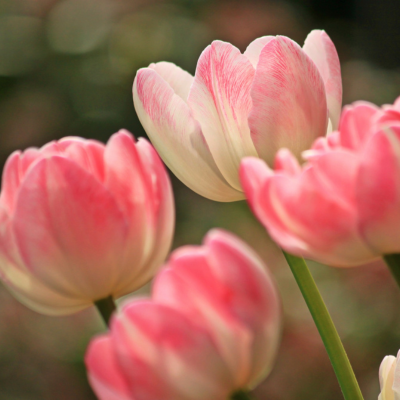
3. Tulips
For dramatic colour and variety, it's hard to beat tulips. They are available in an extraordinary range of colours and flower shapes, from simple cup-shaped blooms to double, fringed and lily-flowered varieties.
Most tulips flower in mid to late spring, making them an ideal follow-on from early crocuses and daffodils. They work particularly well in formal borders and containers, where their bold flowers can create a strong focal point.
Tulip bulbs are planted in autumn, generally from September to November. Planting later in autumn can be beneficial, as cooler conditions can help reduce the risk of some tulip diseases.
For the best results, choose a sunny position with nutrient-rich, free-draining soil.
Why grow tulips?
- Huge range of colours and flower shapes
- Excellent for containers
- Create a striking spring display
- Available in early, mid and late-flowering varieties
- Specialist tulips can return and multiply in suitable conditions
Top tip: If you want tulips to provide a reliable display year after year, look for perennial or specialist varieties. Many bedding-type tulips perform best when treated as seasonal displays.
4. Grape Hyacinth (Muscari)
With their clusters of tiny bell-shaped flowers, grape hyacinths (Muscari) are a fantastic choice for adding intense blue colour to the spring garden.
They are relatively compact, making them particularly useful around the front of borders, beneath taller spring bulbs or in containers. Their blue flowers also combine beautifully with yellow daffodils and brightly coloured tulips.
Like other spring-flowering bulbs, Muscari should generally be planted in autumn. They can be left to naturalise in suitable areas, gradually creating larger groups over time.
Why grow Muscari?
- Beautiful blue spring flowers
- Compact and easy to grow
- Excellent for containers and borders
- Works well planted alongside daffodils and tulips
- Can naturalise over time
Top tip: Plant Muscari in groups rather than individually to create a stronger splash of blue.
5. Snowdrops
For an early-season display, snowdrops (Galanthus) are difficult to beat. Their delicate white flowers can appear while winter is still lingering, making them one of the most welcome sights in the garden.
Snowdrops are particularly effective in woodland-style gardens, beneath deciduous trees and shrubs, or naturalised in areas of grass. They also combine well with later-flowering bulbs, helping create a succession of colour from winter into spring.
Snowdrops are often best planted 'in the green', meaning shortly after flowering while the plants are still in leaf.
Why grow snowdrops?
- Flower exceptionally early in the year
- Ideal for woodland and naturalistic planting
- Beautiful white flowers
- Can form impressive colonies over time
- Perfect for shady areas where many spring bulbs struggle
Top tip: Avoid cutting back snowdrop foliage until it has naturally faded, allowing the plant to build up energy for future flowering.
When should you plant spring flowering bulbs in the UK?
The simple answer is autumn. Spring-flowering bulbs need to establish roots before winter so they are ready to grow and flower when temperatures rise.
As a general guide:
Crocus - Plant in Autumn
Daffodils - Plant September, ideally
Tulips - Plant September–November
Muscari - Autumn
Snowdrops - Often best 'in the green' after flowering
We recommend planting spring-flowering bulbs such as daffodils and crocuses in autumn, with tulips generally planted later, around October or November.
If you've missed the ideal planting window, don't necessarily give up. Bulbs are often worth planting as soon as possible, although late planting can result in weaker or less reliable flowering in the first season.
How to plant spring bulbs
Most spring bulbs are remarkably easy to plant. Choose a position with good drainage and, where appropriate, plenty of sunlight.
As a general guide:
- Choose healthy bulbs – Avoid bulbs that are soft, damaged or showing signs of mould.
- Prepare the soil – Remove weeds and loosen compacted soil.
- Plant at the correct depth – Many bulbs should be planted at around two to three times their own height.
- Position the bulb correctly – Place the pointed growing tip upwards.
- Plant in groups – Groups of bulbs usually create a much more impressive display than isolated plants.
- Water if necessary – Autumn-planted bulbs in moist soil usually need little additional watering.
We recommend planting bulbs in groups of at least six, with larger numbers creating a more impressive display.
Create a succession of spring colour
The best spring bulb displays don't have to flower all at once. By combining bulbs with different flowering periods, you can create colour over several months.
For example, snowdrops and crocuses can provide some of the earliest flowers. These can be followed by daffodils and Muscari, before tulips take centre stage later in spring.
You can also grow several types of bulbs together in containers. Try layering bulbs in pots, with smaller, earlier-flowering bulbs such as crocuses towards the top and larger bulbs deeper down.
Which spring flowering bulbs should you choose?
If you're looking for a simple combination that works well in a typical UK garden, start with crocuses, daffodils and tulips. Add Muscari for rich blue flowers and snowdrops for very early-season interest.
Together, these five spring flowering bulbs can provide a succession of colour from late winter through to late spring, while requiring relatively little maintenance once established.
The key is to plan ahead: buy your bulbs in autumn, choose healthy specimens and plant them in groups for maximum impact. Come spring, you'll be rewarded with a garden full of colour just when you need it most.